
Our Mission
Our mission is to achieve measurable real-world impact through equitable access to AI technologies and innovative research collaborations.
ICAIN's goal is to build a global, cross-cutting network that drives sustainable AI innovation across geographical, social, and economic barriers.
We connect academic institutions, resource providers, implementers and donors across diverse settings with a shared commitment to use AI for the common good.
Together, we combine diverse strengths in compute, education, software, data, contextual expertise, and implementation to drive measurable impact in health, humanitarian response, climate resilience, agriculture, and education, amongst others.
We advance innovative research collaborations selected by ICAIN through a transparent and rigorous process, ensuring high standards for projects funded by members and donors.

Harnesses Global Supercomputing for Sustainability

Advances UN Sustainable Development Goals via AI

Promotes Inclusive AI Research and Education

Democratizes Global AI Technology Access
ICAIN Values

Equity
ICAIN broadens global AI technology access

Sustainability
ICAIN harnesses global supercomputing for sustainability

Safety
ICAIN anticipates and mitigates potential AI risks
About

Problem
The high concentration of computing resources as well as human and technical capabilities limits the enormous positive impact of AI on both sustainable economic growth and scientific progress and creates substantial risks.
What ICAIN does - Iterative growth, early impact, lasting network.
ICAIN operates as an international network anchored at ETH Zürich, which serves as its leading institutional home. The network is built through an iterative process, evolving alongside the needs of its members and partners. Since 2024, pilot projects have generated early impact, tested new approaches, and produced learnings that directly shape how the network develops. These activities ensure ICAIN grows from a foundation of practical experience and genuine collaboration — not organizational design alone.
- We promote equitable distribution of technological benefits to empower communities across all regions of the globe.
- We leverage global AI advancements to optimize resource utilization and enhance efficiency in technology usage.
- We foster knowledge sharing and advancements in AI research and education.
Strategic Mission Areas
The projects are structured around three strategic mission areas and are intended to be scaled up over time. Each area is designed to be mutually reinforcing, building synergies across domains while strengthening local capacity with a long-term perspective:
Climate & Agriculture
Developing AI solutions for crop disease detection, improved weather prediction, and sustainable farming practices to enhance food security and climate resilience.
Health & Humanitarian
Advancing AI applications aligned with international humanitarian law, including medical AI tools adapted for low-resource settings and for use in crisis response.
Education & Capacity Building
Building human capital through training programs, joint masterclasses, and summer schools that equip the next generation of AI talent with the skills to apply AI responsibly and for the common good.
Governing Board
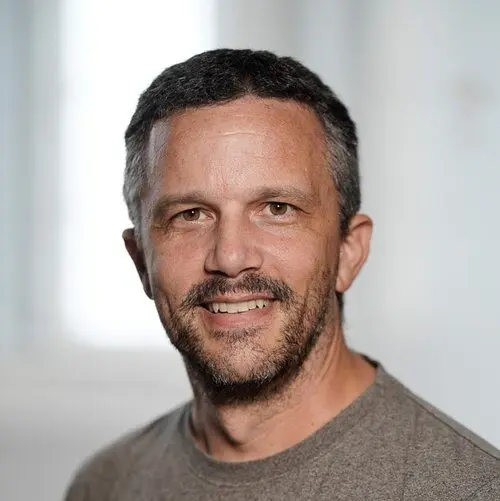
Prof. Dr. Serge Belongie
Director, Pioneer Centre for AI (P1)
Serge Belongie is Professor of Computer Science at the University of Copenhagen and head of the Pioneer Centre for AI. Previously, he was the Andrew H. and Ann R. Tisch Professor of Computer Science at Cornell Tech where he also served as Associate Dean. He has also been a member of the Visiting Faculty program at Google. He is known for his contributions to the fields of computer vision and machine learning, specifically object recognition and image segmentation, and he has co-founded several startups in those areas. He also serves as a board member of the European Laboratory for Learning and Intelligent Systems (ELLIS).
Recent interests include research using language and visions models toward the development of technology that will allow everyday Internet users to protect themselves from misinformation.
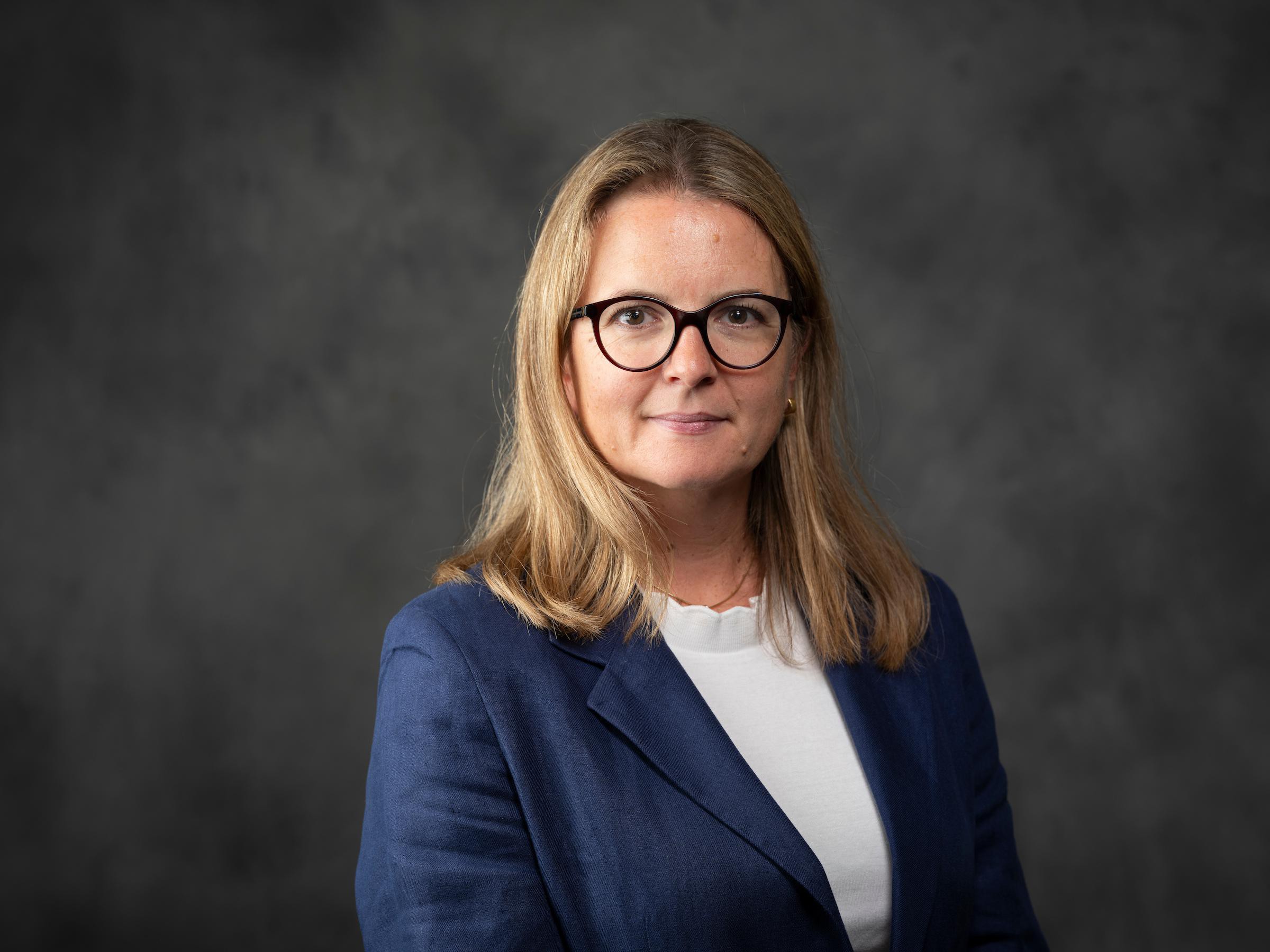
Prof. Dr. Stéphanie P. Lacour
VP Strategic Initiatives, EPFL
Stéphanie P. Lacour is full professor at the School of Engineering at the Ecole Polytechnique Fédérale de Lausanne. She received her PhD in Electrical Engineering from INSA de Lyon, France, and completed postdoctoral research at Princeton University (USA) and the University of Cambridge (UK). She joined EPFL in 2011. She was the founding director of EPFL Neuro X institute – a new interschool department focused on interdisciplinary and translational neuro-research located at EPFL-associated campus – Campus Biotech in Geneva. Since 2025, she is EPFL Vice-President for support to Strategic Initiatives.

Dr. Damien Lecarpentier
Director, CSC – IT Center for Science
Damien Lecarpentier has held various positions at CSC Finland related to international collaboration in the area of advanced computing, data management and e-Infrastructure developments.

Prof. Dr. Ciira wa Maina
Associate Professor, Dedan Kimathi University
Ciira Maina is Associate Professor at Dedan Kimathi University of Technology in Nyeri, Kenya where he teaches electrical engineering and also conduct research in a number of areas including bioacoustics, IoT, machine learning and data science. Since September 2019 he has led the Centre for Data Science and Artificial Intelligence (DSAIL). He also serves as the board chair of Data Science Africa.

Dr. Jessica Montgomery
Executive Director of ai@cam, Cambridge
Jessica Montgomery is currently Director of ai@cam, a new University of Cambridge strategic mission to develop AI technologies that serve science, citizens, and society. Alongside this role, she leads a variety of research and policy programmes tackling the real-world challenges associated with developing and deploying AI for societal benefit. These include: Accelerate Science, an initiative developing AI tools and collaborations in support of research and innovation; the Data Trusts Initiative, an incubator programme for pilot projects creating trustworthy data governance frameworks; and strategic research agenda development for the ELISE/ELLIS network of European AI research. Her interests in AI and its consequences for science and society stem from her policy career, in which she worked with parliamentarians, leading researchers and civil society organisations to bring scientific evidence to bear on major policy issues.

Prof. Dr. Annette Oxenius
VP Research, ETH Zurich
The Vice President for Research is committed to excellent, free and open research that is characterised by personal responsibility and crosses boundaries between disciplines and institutions. To this end, she and her team promote, support and advise researchers at all career levels on networks and research infrastructures as well as on projects and careers. Together with the Rector, she is also responsible for evaluations of the departments and ETH units, reporting and policies that contribute to the quality assurance of research at ETH Zurich. In addition, she is responsible for ensuring scientific integrity and is committed to ensuring that this is practised at ETH Zurich. Since 2012 Annette Oxenius is also full Professor for Immunology.

Katharina Frey
Executive Director, ICAIN
Katharina Frey currently serves as Executive Director of the International Computation and AI Network (ICAIN), which is based at ETH Zurich. Ms. Frey brings a strong track record in digital diplomacy, AI governance, and global partnerships. She was a career diplomat with the Swiss Federal Department of Foreign Affairs for 17 years and was posted in Paris, Bern, and Vienna (UN). In her last posting at HQ, she helped establish the Digital Foreign Policy Division and shaped Switzerland's strategy on digital governance and cybersecurity. She has led projects to strengthen cyber resilience for the "International Geneva aka UN site in Geneva" and has pioneered AI research initiatives with ETH and international partners.
IGAIP call
The International Geneva AI Innovation Programme (IGAIP)
How can AI expertise help address concrete humanitarian challenges? The International Geneva AI Innovation Programme, IGAIP, is taking a first step: In June 2026, the first projects were selected for funding.
Artificial Intelligence is advancing rapidly, yet many UN agencies and other international organizations based in Geneva lack access to sovereign compute, applied AI research capability, and reusable digital components. Anchored within ICAIN and with the support of the Swiss Federal Department of Foreign Affairs (FDFA), IGAIP addresses this gap. The programme aims to lower barriers to advanced AI capabilities—including computing resources, models, data, and AI expertise by linking organizations in International Geneva to academic excellence. The aim is to enable organizations and researchers to build and operate AI systems on their own terms, with transparency and interoperability at the core.

Photo credit: FDFA, Presence Switzerland
The IGAIP Projects
From refugee self-reliance to public health, climate risk, and AI-assisted learning, the projects show how AI expertise can be directed toward concrete humanitarian challenges.
Self reliance and job matching for refugees
Project: AI-Supported Interviews and Job Matching
Team: ETH Zurich, Prof. Dominik Hangartner & UN Refugee Agency, UNHCR
Labor market integration is central to the self-reliance of refugees. The currently used digital tools to help refugees find work rely on static forms to collect information on refugees' skills and constraints and to match them to local vacancies. This project aims to create a more effective and scalable solution. It will develop and evaluate two complementary AI-supported technologies for the UNHCR workflows—one is a safe, structured, multilingual interview agent that helps create high-quality refugee jobseeker profiles, the other an explainable matching algorithm that links these profiles to vacancy data.
Making better use of genomic data for global public health
Project: AI for Real-Time Integrated Genomic Analysis
Team: ETH Zurich, Prof. Tanja Stadler & WHO
Genomic data are vital for public health, revealing transmission patterns, emerging variants, and mutations that may affect diagnostics, treatments, or vaccines. However, to be useful in practice, these data must be interpreted alongside epidemiological, biological, and event-specific information. This project will explore how AI can help combine such contextual knowledge with genomic data.
Risk mitigation for displaced people
Project: AI-Powered Early Warning and Profiling for Displaced Populations
Team: ETH Zurich, Dr. Christina Humer, Dr. Rita Sevastjanova & International Organization for Migration, IOM
Displaced populations, already uprooted by conflict or disaster, are highly exposed to the secondary risks of climate shocks that delay or prevent recovery. Yet frontline humanitarian responders currently lack integrated, rapidly deployable climate risk profiling tools at the displacement site level. To address this problem, the project will use existing AI climate models to pilot a generalizable system that provides predictive weather risk assessments for displacement sites based on GPS queries.
Support for AI Education
Project: Empowering Training, Education and Learning with AI
Team: ETH Zurich, Dr. Gerd Kortemeyer, Prof. Mrinmaya Sachan, EPFL Prof. Martin Jaggi, and team & United Nations Institute for Training and Research, UNITAR & United Nations International Computing Center, UNICC
UN agencies such as UNITAR run training programmes for thousands of professionals across dozens of countries, yet developing curriculum-aligned materials and providing individualised learning support remain largely manual processes. The project addresses this gap by developing an integrated AI-assisted learning and content generation system based on Ethel, an open-source AI platform deployed at ETH Zurich and EPFL.
Supporters of ICAIN
The supporters of ICAIN provide financial contributions to its thematic pillars. Their commitment helps to scale pilot projects and advance ICAIN's long-term mission of making AI resources accessible for the common good:



Founding Members
ICAIN comprises leading scientists, researchers, and educators from renowned institutions worldwide, including some of the most powerful supercomputer centers, who are dedicated to leveraging AI and computational power for the good of humanity.






Our Pilot Projects
Climate & Agriculture Pillar
Health & Humanitarian Pillar
1. Improved Weather Prediction for Sustainable Agriculture
In order to improve agricultural production in Africa, it is important to improve the accuracy of weather forecasts available to small scale farmers. Agriculture in Africa is mainly rain fed and accurate rainfall prediction is likely to improve yields by allowing farmers to appropriately time activities such as planting and also help them select appropriate crops to grow.
Read more2. Early diagnosis of plant diseases through spectroscopy
About 40% of the global crop production is lost to pests. Sub-Saharan Africa is most vulnerable to the increasing risks of pests and diseases spreading in agriculture. The current methods of disease identification and diagnosis involve experts traveling to disparate parts of the country and visually scoring the plants by looking at the disease symptoms manifested on the leaves.
Read moreHealth & Humanitarian Pillar
3. Ethical AI for Humanitarian Action - Developing Tailored LLMs
The International Committee of the Red Cross (ICRC) seeks to leverage Large Language Models (LLMs) to enhance its humanitarian work. Challenges like the bias of existing models, the underrepresentation of humanitarian contexts in commercial AI training sets, and the sensitivity of data related to conflicts limit the adoption of off-the-shelf AI models.
Read moreEducation & Capacity Building Pillar
4. AI for All
Artificial Intelligence (AI) is transforming the world at an unprecedented pace. However, across Africa, a significant gap exists between AI innovators and the communities intended to benefit from these technologies. While interest in AI is growing, many societies still lack the foundational knowledge, skills, and infrastructure needed to engage meaningfully with it.
Read more5. AI Drivers License
The AI Driving License is a gamified, open-source education initiative within ICAIN's Education Pillar that empowers citizens — especially young people — to build essential AI literacy for democratic participation in a rapidly digitalizing world. Through an interactive card game available in four languages, players explore core AI concepts such as machine learning, bias, data ethics, and automation while engaging in real-world scenarios and ethical dilemmas.
Read moreNews
Global inequality shows up in AI weather predictions for Africa
Feb 26, 2026
A CSCS feature highlights ICAIN pilot-project research showing that AI weather forecasts are significantly less accurate for Africa, underscoring the need for more equitable access to supercomputing, regional data, and AI expertise.
Supercomputers help reduce inequality
Jan 22, 2024
Data Science Africa join international partners to launch the International Computation and AI Network
Jan 19, 2024
World's most powerful supercomputers support UN SDGs and global sustainability
Jan 19, 2024
Rebalancing the global AI landscape: ELLIS becomes a founding member of ICAIN
Jan 17, 2024
Action Pillars
- Summer Schools
- Master Classes
- Data Challenges
- Feasibility Studies
- Applied Research Projects
- Interdisciplinary Collaborations
- Research Transfer
- Solution Scale-Up
- Sustainable Impact